Smart Contract Development: Basics and Common Security Pitfalls
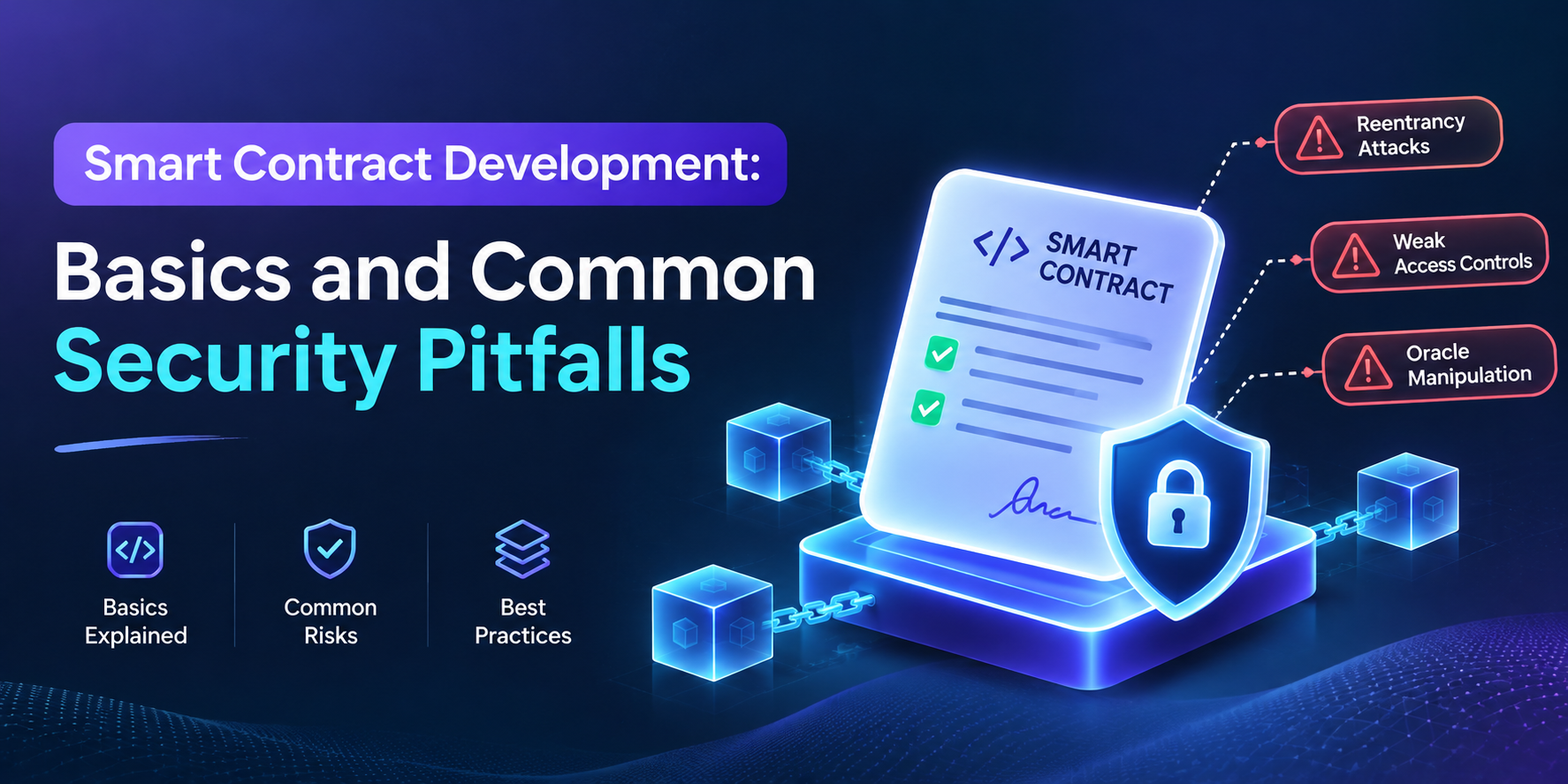
Smart contracts are changing how businesses handle digital agreements, payments, and transactions. Instead of relying on someone to manually approve every step, these programs automatically perform actions when certain conditions are met. They can save time, reduce paperwork, and make transactions easier to track. But there's one important thing businesses often overlook: a smart contract is only as reliable as the code behind it.
This is why companies exploring blockchain technology should understand both its benefits and risks before investing. Working with experienced providers of Blockchain Development Services can help businesses plan, develop, test, and secure smart contracts that support real business needs.
What Is a Smart Contract?
A smart contract is a program stored on a blockchain that follows predefined rules. When the required conditions are satisfied, the program executes the relevant instructions.
Imagine a company paying a supplier after a shipment is confirmed. A smart contract could automatically release payment once a trusted system verifies delivery.
Smart contracts are commonly used for:
- Financial transactions: Automating payments, lending, and asset transfers.
- Supply chain management: Tracking goods and triggering payments.
- Insurance: Processing claims when verified conditions are met.
- Digital ownership: Managing tokens and ownership transfers.
- Business agreements: Automating specific steps in contractual workflows.
However, smart contracts cannot independently verify everything happening in the real world. They often depend on external data sources.
How Does Smart Contract Development Work?
Developing a smart contract involves more than writing a few lines of code.
1. Define the Business Requirements
Start by identifying the problem the contract should solve. What actions should happen automatically? Who can access the system? What happens when something goes wrong?
Clear answers help prevent unnecessary complexity.
2. Choose the Right Blockchain
Ethereum and other compatible networks commonly use Solidity for smart contract development.
The choice depends on transaction costs, security requirements, network capabilities, and business goals.
3. Develop and Test the Contract
Developers write the contract logic and test different situations, including unexpected inputs, failed transactions, and unauthorized access attempts.
4. Audit and Deploy
Before deployment, the contract should undergo security reviews and independent audits when appropriate.
Once deployed, some contracts cannot be changed directly. Upgradeable contracts require additional controls and introduce their own security risks.
Common Smart Contract Security Pitfalls
Smart contracts can handle valuable assets, which makes security mistakes especially expensive.
1. Reentrancy Attacks
Reentrancy occurs when an external contract calls back into a vulnerable function before the original operation finishes.
Attackers may exploit this behavior to withdraw funds repeatedly.
How to prevent it: Update internal balances before making external calls, use reentrancy guards, and test withdrawal functions carefully.
2. Weak Access Controls
Not every user should have permission to change contract settings, withdraw funds, or modify important business rules.
Poor permission management can expose the entire system.
How to prevent it: Use role-based permissions, restrict administrative functions, and protect sensitive actions with multisignature approval where appropriate.
3. Oracle Manipulation
Smart contracts sometimes rely on outside information, such as cryptocurrency prices or shipment confirmations.
If attackers manipulate that information, the contract may execute incorrect transactions.
How to prevent it: Use reliable oracle providers, validate incoming data, and consider multiple independent sources.
4. Integer and Calculation Errors
Small calculation mistakes can produce unexpected financial results.
Although modern Solidity versions include overflow and underflow checks by default, rounding errors and incorrect mathematical assumptions remain possible.
How to prevent it: Test calculations using boundary values and review financial formulas carefully.
5. Poor Testing Before Deployment
A contract might work perfectly during normal transactions but fail under unusual conditions.
These hidden problems can become serious after deployment.
How to prevent it: Combine automated tests, fuzz testing, static analysis, and manual security reviews. Test unusual scenarios rather than only successful transactions.
Best Practices for Secure Smart Contract Development
Businesses considering smart contract technology should focus on long-term reliability rather than rushing to launch.
A few practical steps make a significant difference:
- Keep contract logic simple and understandable.
- Use established, well-reviewed libraries.
- Avoid unnecessary administrator permissions.
- Conduct independent security audits.
- Test integrations with wallets, oracles, and external contracts.
- Monitor contract activity after deployment.
- Prepare an incident response plan before handling real assets.
Professional Blockchain Development Services can support these processes, but no development team or audit can guarantee complete protection.
Final Thoughts
Smart contracts can make digital transactions faster, more transparent, and easier to manage. However, automation also means that coding mistakes can have immediate consequences.
The smartest approach is to start with a clear business problem, understand the security risks, and invest in proper testing before deployment.
A successful smart contract isn't simply one that works. It continues working safely when real users, unexpected situations, and potential attackers put it to the test.
Comments
Join the discussionNo comments yet. Be the first to comment.